

What if the true engine of the electric vehicle revolution wasn’t the battery but the invisible fluid working silently within it? As electric mobility reshapes the future of transportation, attention is increasingly shifting from motors and software to the systems that quietly enable them to perform. Among these, Electrified Transmission Fluid (ETF) plays a pivotal yet often overlooked role, redefining efficiency, reliability, and long-term durability. As India’s EV market gains momentum and global innovation accelerates, ETF emerges at the intersection of materials science, electrification, and next-generation mobility quietly powering the shift toward a cleaner, smarter automotive future.
Traditional internal combustion engine (ICE) vehicles relied on multiple fluids for lubrication, cooling, and power transmission. While EVs eliminate combustion-related challenges, they introduce an entirely new set of technical demands. Electric motors, inverters, and reduction gear systems operate under conditions far more intense than those found in conventional drivetrains, requiring a new generation of specialized fluids.
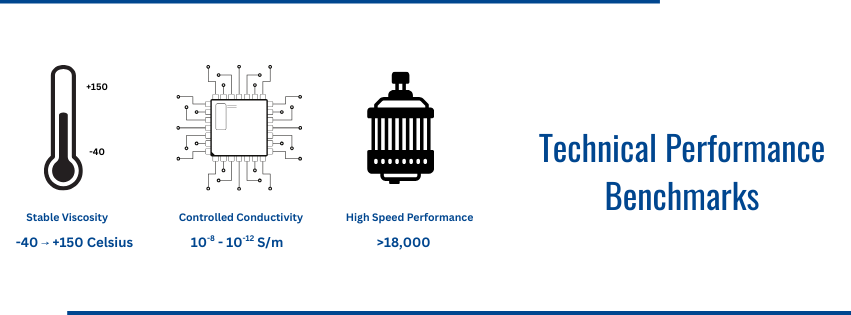
Electric motors can operate at speeds exceeding 20,000 RPM, significantly higher than ICE systems. This places immense stress on lubricants, particularly in terms of thermal stability and mechanical durability. At the same time, the proximity of fluids to sensitive electrical components introduces challenges unseen in traditional powertrains. As a result, ETF must perform several critical functions simultaneously:
● Provide effective lubrication under high torque and high-speed conditions
● Ensure copper compatibility to protect motor windings and electrical components
● Act as a dielectric medium to prevent electrical shorting and charge buildup
● Support efficient heat dissipation to maintain system stability
In electric drivetrains, where single-speed gear reductions are common, the fluid must manage sustained loads while maintaining low frictional losses. These demands elevate ETF from a conventional lubricant to a multifunctional performance enabler. In markets like India, where high ambient temperatures and variable driving conditions are the norm, this capability becomes even more critical.
Technical Foundations: What Makes a Good Electrified Transmission Fluid?
From a scientific standpoint, the formulation of ETF requires a careful balance of properties. Key performance parameters include:
● Copper compatibility, to prevent corrosion and degradation of motor windings
● Controlled electrical conductivity, ensuring safe dissipation of stray currents
● High thermal stability, allowing sustained performance under extreme heat
● Resistance to aeration and foaming, which can compromise lubrication and cooling efficiency
These requirements are pushing the development of new base oils, additive chemistries, and testing methodologies. Traditional evaluation standards are being redefined to account for electrical behavior, material compatibility, and long-term aging under combined mechanical and thermal stress.
As EV architectures continue to evolve, so too will the demands placed on transmission fluids. The role of ETF is expanding beyond lubrication into a core enabler of performance, durability, and efficiency. In this context, electrified transmission fluids are no longer peripheral components, they are foundational to the success of next-generation electric mobility.
By bridging mechanical protection, thermal management, and electrical safety, ETF is helping shape a future where electric vehicles are not only cleaner, but also more reliable, efficient, and better suited to the realities of modern mobility.
The Role of ETF in Broader EV Performance
Innovations in ETF are not limited to just keeping gears turning. Beyond the transmission, these specialized fluids are engineered for cooling electric motors, managing the thermal loads of fast-charging batteries, and even lubricating key chassis components. Products like Shell’s E-Fluids portfolio, for example, offer not only exclusive transmission fluids but also greases and battery coolants, all tailored to enhance efficiency and reliability across a spectrum of vehicle types from compact city cars to delivery vans and heavy trucks.
In practical terms, ETF makes it possible for EVs to withstand India’s high heat and variable traffic conditions while meeting consumer expectations for rapid charging, long life, and minimal maintenance. Products are constantly tested in extreme environments, including competitive motorsport, to push the boundaries of what is possible and to ensure robustness under real-world driving scenarios.
Market Dynamics: How ETF is Changing the Lubricant Industry
The rapid rise of electric mobility is redefining the role of lubricant manufacturers, transforming what was once a volume-driven industry into a technology-led ecosystem. Rather than signalling a decline in demand, electrification is opening new growth avenues as advanced fluids become integral to the performance, safety, and efficiency of electric drivetrains. Electrified transmission fluids, in particular, are emerging as a critical product category, prompting both global and domestic players to realign their portfolios around innovation and high-value applications.
Across the industry, lubricant manufacturers are increasingly shifting focus toward purpose-built fluids designed for electric powertrains. These include advanced coolants, e-transmission fluids, and specialty greases engineered to handle high rotational speeds, electrical conductivity requirements, and elevated thermal loads. This evolution reflects a broader strategic move away from conventional lubrication toward integrated thermal and energy management solutions that directly influence vehicle efficiency and durability.
Indian players, in particular, are strengthening their presence by investing in indigenous research capabilities, pilot-scale testing facilities, and collaborative development with OEMs. This shift marks a move up the value chain from commodity lubricant supply to becoming technology partners in the EV ecosystem. The emphasis is now on co-developing fluids that align with next-generation vehicle architectures, fast-charging systems, and compact drivetrain designs.
At a global level, the industry is also witnessing a convergence between lubricant technology and sustainability goals. Advanced e-fluids are being designed to support lower energy losses, extended service life, and reduced environmental impact, aligning with broader decarbonisation objectives. As electric mobility continues to scale, the lubricant sector is transitioning into a high-tech enabler of clean transportation, positioning electrified transmission fluids as a cornerstone of the future mobility value chain.

Shaping India’s EV Future: Scope and Opportunities
India’s electric mobility ecosystem is expanding at an unprecedented pace, positioning the country among the fastest-growing EV markets globally. With EV penetration expected to rise from under 2% today to over 30% by 2030 across select vehicle segments, the demand for advanced technologies, particularly electrified transmission fluids is set to grow exponentially. Government initiatives such as FAME, state-level EV policies, and production-linked incentives for advanced automotive manufacturing have collectively accelerated the adoption of electric two-wheelers, three-wheelers, passenger vehicles, and commercial fleets.
As EV volumes increase, so does the need for specialised fluids capable of managing higher thermal loads, compact drivetrains, and extended duty cycles. Compared to conventional lubricants, electrified transmission fluids must deliver multi-functional performance: cooling electric motors, lubricating high-speed gears, insulating electrical components, and supporting fast-charging capabilities. This shift is transforming fluids from a maintenance consumable into a performance-critical system component.
India’s EV market presents a particularly strong opportunity due to its diverse operating conditions. High ambient temperatures, dense traffic, and wide variations in driving patterns place additional stress on powertrains, making advanced fluid formulations essential. With electric two- and three-wheelers expected to account for a significant share of vehicle electrification in the near term, demand is rising for cost-effective yet high-performance fluids tailored to compact drivetrains and high-utilisation cycles.
From a market perspective, this transition is encouraging lubricant manufacturers to move beyond traditional volume-led strategies toward innovation-driven growth. Investments in localized R&D, application-specific testing, and collaboration with global technology partners are becoming central to staying competitive. As the industry shifts from commodity lubricants to engineered mobility solutions, electrified transmission fluids are emerging as a key differentiator, positioning India as a growing hub for next-generation fluid technologies supporting the future of clean mobility.
The Road Ahead: ETF as a Market Differentiator
Looking forward, the ETF landscape will be shaped not just by technical requirements but also by the ongoing standardization of test procedures and benchmarks. As more OEMs enter the EV space and hardware designs diverge, the fluid industry is likely to collaborate even more closely with automakers to co-engineer solutions that maximize hardware performance, safety, and longevity.
In India specifically, ETF will underpin the electrification of the passenger and commercial vehicle segments. As performance expectations rise and consumers demand faster charging, more range, and robust longevity from their cars, the role of ETF will only grow in significance. The new paradigm will be defined by immersive battery cooling, advanced materials compatibility, and lubricants that do more with less environmental impact.
Electrified Transmission Fluid is transforming not only what goes under the hood of an electric vehicle, but the very structure and direction of the automotive value chain. Powered by science, forged through rigorous OEM collaboration, and shaped by India’s dynamic EV market, ETF has emerged as a linchpin for sustainable, high-performance electric mobility. For automakers, fleet operators, lubricant manufacturers, and forward-looking consumers, understanding and embracing ETF is more than just a technical requirement, but a competitive advantage in the age of electrification.
By keeping pace with ETF advancements and the evolving Indian and global market landscape, stakeholders across the spectrum can help ensure that electric mobility not only accelerates but thrives- delivering on the promise of cleaner, safer, and more efficient transport for all.